The Episcopal Church
Welcomes You
The Episcopal Church
Welcomes You
Our Presiding Bishop
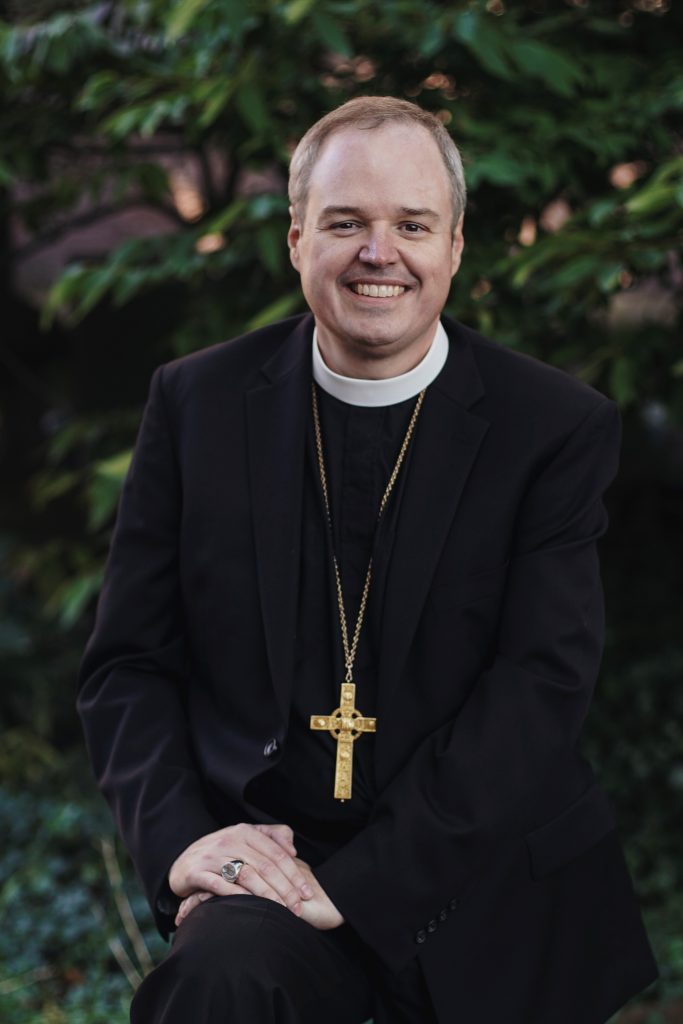
The Most Rev. Sean W. Rowe
28th Presiding Bishop & Primate
The Most Rev. Sean W. Rowe was elected presiding bishop and primate of The Episcopal Church in June 2024 and took office on Nov. 1 for a nine-year term. In this role, he serves as the church’s chief pastor and CEO. Known for his expertise in organizational learning and adaptive change, Rowe is committed to strengthening support for local ministry and mission.
He was ordained bishop of the Episcopal Diocese of Northwestern Pennsylvania in 2007 after serving as rector of St. John’s in Franklin, Pennsylvania, for seven years. From 2014 to 2018, he served as bishop provisional of the Episcopal Diocese of Bethlehem, and from 2019 to 2024, he led a partnership between the Episcopal Dioceses of Northwestern Pennsylvania and Western New York.
Rowe holds a bachelor’s degree in history from Grove City College, a Master of Divinity degree from Virginia Theological Seminary, and a doctorate in organizational learning and leadership from Gannon University. He has served as a leader of many civic and churchwide organizations and governance bodies, and as parliamentarian for the House of Bishops.
Our Family



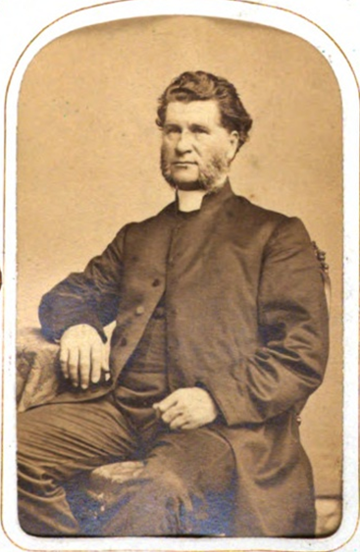 At the October 1859 General Convention, delegates proposed and ratified creation of the Missionary District of the Northwest, a 750,000 square-mile area that included Nebraska Territory. The convention elected Rev. Joseph Cruickshank Talbot of Christ Church, Indianapolis, Indiana, to serve as the new Missionary Bishop. He was consecrated on February 15, 1860, and arrived in Nebraska City, Nebraska Territory on April 24, 1860. Bishop Talbot purchased a small farm outside of the community and settled his family there. For the next five years, the bishop traveled almost constantly – north into the Dakotas, South to the Nebraska-Kansas border, west into the territorial regions of Colorado and Wyoming. In 1863, he went west by wagon all the way to the Pacific Coast. That journey of seven months and 7,000 miles was the longest trip ever undertaken by a domestic missionary.
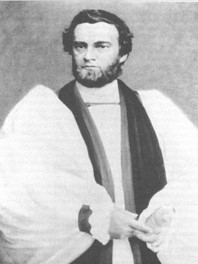 In 1865, Bishop Talbot returned to Indiana as Bishop Coadjutor. During the intervening five years, territorial organization of regions bordering on the Nebraska Territory had reduced the size of the missionary district to approximately that of the area which would become the states of Nebraska, North Dakota, and South Dakota. Rt. Rev. Robert Harper Clarkson of St. James’ Episcopal Church in Chicago, Illinois, succeeded Bishop Talbot as Missionary Bishop; the new smaller district was called the Missionary District of Nebraska and Dakota. Even after the independent Episcopal Diocese of Nebraska was established, Bishop Clarkson continued to serve as Missionary Bishop of Dakota until the Missionary District of Niobrara was created in 1873,with Rt. Rev. William Hobart Hare as its head.
 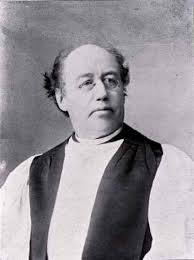 After an arduous search and difficult election process, Rev. Dr. George Worthington of St. James’ in Detroit, Michigan, was elected to succeed Bishop Clarkson as Nebraska’s prelate. He was consecrated on February 24, 1885. A Social Gospel activist, Bishop Worthington sought to spread the Gospel among the marginalized in urban populations. To that end initiated the Associate Mission to establish mission churches in less affluent areas of Omaha. But Bishop Worthington found travel into the western part of Nebraska difficult and less imperative because the region was still sparsely settled and there were few communicants. Thus in 1889, he encouraged Nebraska delegates to petition the General Convention to create a Missionary District in the western part of the state, leaving only forty eastern counties under the administration of the Diocese of Nebraska. The General Convention ratified the proposal, and until 1946, the eastern and western parts of Nebraska remained administratively separate.
 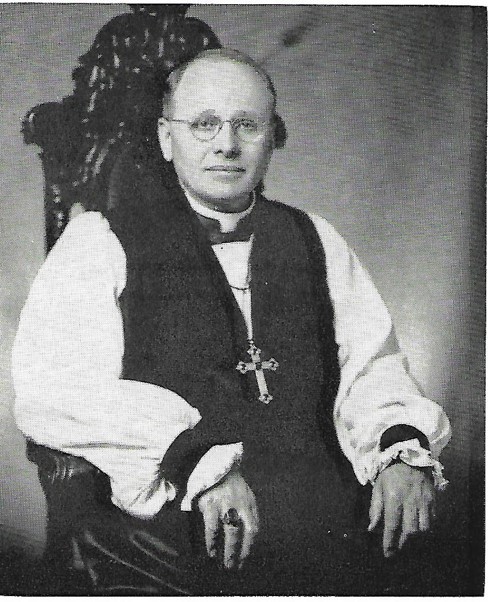 In the decades after creation of the Western Missionary District, two bishops successively ministered to the flock in the western part of Nebraska. (See the list below.) In the first decades of the twentieth century, Rt. Rev. Arthur Llewellyn Williams was elected to serve as bishop of the Diocese of Nebraska in the eastern part of the state. A consummate record-keeper from his early non-clerical career, Bishop Williams initiated the parish assessment system in the diocese. He was succeeded by Rt. Rev. Ernest Vincent Shayer. The post World War I era was one of unbridled spending at many levels and of wide-open mores brought on by prohibition under the Eighteenth Amendment. Eventually, Americans’ compulsion with buying stocks “on the margin” forced the market to crash. The resultant Depression that began in 1929 hit parish pocketbooks equally as hard as it did those of rank and file Americans, placing a severe strain on the diocesan budget. Bishop Ernest Vincent Shayler’s health was negatively impacted, and he retired in November 1938. He was succeeded by Rt. Rev. Howard Rasmus Brinker. Under Bishop Brinker, the Diocese of Nebraska and the Western Missionary District were reunited into one diocese. The reconciliation resolution was approved at the General Convention held in Philadelphia the following September, and in February 1947, the united diocese held its first annual council under the leadership of Bishop Brinker. The 1950s saw tremendous growth in church attendance, and church schools across the state were “completely outgrown.” In his 1953 address, Bishop Brinker reported at council that “almost every congregation has a building Program for the future.”
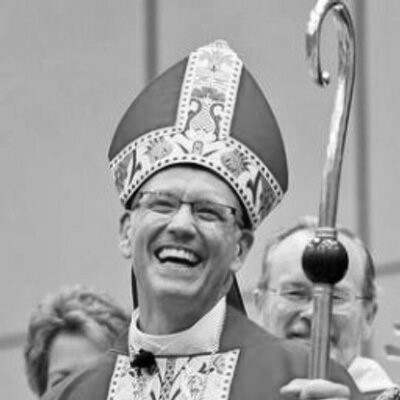 The decades between the 1960s and the 1990s brought a seismic shift in culture. Nebraska bishops Rt. Rev. Russell T. Rauscher, Rt. Rev. Robert P. Varley, Rt. Rev. James D. Warner, and Rt. Rev. James Krotz had to smooth the differences among members of their flock on issues of race and civil rights, on America’s involvement in the Vietnam War, on revisions to the Book of Common Prayer, on women’s right to seek ordination, and on the legitimacy of homosexuals’ calls to ministry. In the last two decades, Rt. Rev. Joe Burnett and our present bishop, Rt. Rev. J. Scott Barker have faced restrictive budgets while simultaneously conducting outreach programs to the state’s marginalized. The vast physical distances between western and eastern Nebraska make statewide Episcopal community difficult. Yet just as in our territorial era, Nebraska Episcopalians remain committed to their faith. Cultural issues and technology have changed, but as Episcopalians did 165 years ago, we gratefully protect our planet; we “strive for justice and peace among all people”; and always, we “respect the dignity of every human being.”